The Bay Area group coordinator's nightmare plays out the same way each trip: one person drives, two people rideshare, somebody's still stuck on US-101 in morning commute traffic, and the whole group ends up scattered across three different terminals with luggage and no clear plan. San Francisco International Airport handles more than 54 million passengers a year across four terminals, and getting a large group through it cleanly — on time, together, with everyone's checked bags — takes more coordination than most trips account for. A charter bus or minibus rental from Sanfranciscopartybuscompany.com solves the whole sequence: one vehicle, one pickup location, one curbside drop at departures, and the same bus waiting at arrivals when you land.
This guide walks through exactly how that works at SFO, using the airport's own published access rules and the current Terminal 3 construction situation, so your group knows what to expect before you're standing at baggage claim with ten suitcases and a group chat that stopped responding.
For a broader look at Bay Area group ground transportation, the San Francisco airport transportation page covers the full scope of what's available. This guide focuses on the operational logistics of the SFO run specifically — where the bus drops off, where it picks up, what the Terminal 3 construction changes for your group in 2026, and how the charter bus option compares against every other way to move a group through SFO.
Why Rent a Charter Bus or Party Bus to SFO?
Nobody organizes carpools to SFO because they want to. They do it because they haven't run the real math yet. Here's what the math looks like for a 22-person corporate team flying out of Terminal 2 on a Monday at 8 a.m.: five cars, five people competing for space in the short-term domestic garage at roughly $39 per 24 hours, five separate routes navigating the US-101 corridor during morning commute, five different arrival windows at the curb — and one very stressed organizer texting everyone to find out where they are.
A single 15–35 passenger minibus handles the whole group in one coordinated run. One pickup location, one departure time, one curbside drop at the departures level. No parking scramble, no one drawing straws for who has to drive home from the airport later, and no group chat blowing up at 6:45 a.m.
For arriving groups, the logistics are even more one-sided. Rideshare pickup at SFO's domestic terminals isn't at the arrivals curb — it's on Level 5 of the Domestic Garage, an 8-minute walk from baggage claim through a sky-bridge and elevator system. For a team of 15 with rolling bags after a cross-country flight, that's a production.
A charter bus or shuttle meets the group at the arrivals level curbside instead — the lower roadway right outside baggage claim doors. Collect your bags, walk out, and the bus is right there. That single difference is why SFO airport runs consistently rank among the most-requested trips in Sanfranciscopartybuscompany.com's network of bus companies serving San Francisco and the Bay Area.
Charter Bus and Party Bus Drop-Off at SFO, Terminal by Terminal
SFO operates on two roadway levels: the upper Departures level for drop-offs and the lower Arrivals level for pickups. For a charter bus or minibus, your group coordinator needs to know which level, which terminal, and — for Terminal 3 in 2026 — which construction-affected zones to route around.
Departures (dropping your group off before a flight): Charter buses drop passengers curbside at the Departures level roadway for their specific terminal. For Terminal 1 (Harvey Milk Terminal — Southwest, JetBlue, Frontier) and Terminal 2 (Alaska Airlines, American Airlines), the upper roadway flows normally — your bus pulls to the departures curbside, unloads, and clears. For Terminal 3 (United Airlines), the picture has changed significantly in 2026: SFO's published guidance states the departures curb between Doors 6 and 13 is closed due to the Terminal 3 West Modernization project, and morning drop-offs route better through Terminal 2 or the Terminal 3 arrivals level.
United passengers flying out of D or E gates should check in at Terminal 2 counters; passengers headed to F gates use Terminal 3's still-open east-end counters. For the International Terminal, charter buses access the center island on the Departures Level at Zones 14–17.
Arrivals (picking up your group after a flight): Bus and shuttle pickups for arriving passengers happen at the Arrivals level (Level 1) curbside — the lower roadway directly below departures. The sequence that works: have your entire group assembled at baggage claim with all bags collected, then call the bus in. SFO's curbside wait windows are short and enforced; a bus that arrives before the group is assembled will be moved by airport staff.
For Terminal 3 arrivals in 2026, baggage claim carousels 1–3 are temporarily closed; Doors 4 through 12 are the active pickup exits, with Doors 10–12 typically the least congested during this construction phase. For the International Terminal, the arrivals curbside is at Level 1, directly outside the baggage claim exit. Check the official SFO ground transportation page before your trip — Terminal 3 access is evolving through 2027 and details may shift between now and your travel date.
Rideshare vs. Charter Bus Rental at SFO: What Actually Happens
SFO moved rideshare pickup off the arrivals curb in 2019 and it hasn't returned. For domestic terminals, Uber and Lyft pickups happen on Level 5 of the Domestic Garage — an estimated 8-minute walk from baggage claim through sky-bridges, corridors, and elevator banks. For a solo traveler with a carry-on, that's manageable.
For a group of 20 with checked bags on a Tuesday evening after a connecting flight, it's a full exercise in group coordination: everyone hauls luggage up to the garage, navigates to their zone letter (Terminal 1: Zones A/B, Terminal 2: Zones C/D, Terminal 3: Zones E/F/G), and waits for however many separate cars the group needed to book. Surge pricing kicks in as demand peaks at the garage, and the post-game wait for four or five separate cars arriving at different times adds another 15–30 minutes to the pickup.
International Terminal rideshare pickup is on the Departures Level (third floor), Zones 14–17 — meaning every international arrival clears customs and claims bags at Level 2, then has to go up a floor to reach their car. A charter bus meets the group at the arrivals curbside at Level 1 instead. The comparison is direct: one vehicle, one curbside door, no garage navigation.
| Option | Pickup Location | Walk with luggage | Group arrives together? | Best for |
|---|---|---|---|---|
| Charter bus / minibus rental | Arrivals curbside (Level 1), each terminal | Minimal — straight out the baggage claim doors | Yes — one vehicle, one pickup point | Groups of 10 or more |
| Rideshare (domestic terminals) | Level 5, Domestic Garage | ~8 minutes through sky-bridges and elevators | No — multiple cars, staggered arrivals | 1–3 people, light luggage |
| Rideshare (International Terminal) | Departures Level, Zones 14–17 | Must go up one floor from arrivals to reach the car | No — multiple cars needed for a group | 1–3 people, one bag |
| BART | International Terminal station (G concourse) | Free AirTrain connects domestic terminals* | Only if the whole group boards the same train | Solo travelers, 1–2 bags, downtown destination |
| Rental cars | Consolidated Rental Car Center via AirTrain | AirTrain ride + rental car facility walk | No — multiple cars required for larger groups | 2–4 people with independent itinerary |
*The Terminal 3 AirTrain station is closed through 2027. Terminal 3 travelers currently use the Terminal 2 AirTrain stop and walk through construction-zone paths to connect to BART and the Rental Car Center. A private bus skips the AirTrain entirely.
BART is worth understanding as a standalone option. The station sits in the International Terminal's G concourse, and a one-way ticket to downtown San Francisco — Powell, Montgomery, or Embarcadero stations — runs approximately $11.80 per person, with a ride time of about 30 minutes. BART runs from 5 a.m. to midnight on weekdays, 6 a.m.
Saturdays, and 8 a.m. Sundays. For one or two people traveling light to a downtown hotel, BART is a strong option.
For a group of 18 with checked bags flying in from a red-eye, needing drops at three different Peninsula and East Bay hotels, BART becomes a multi-transfer endurance event rather than a solution. One coordinated bus handles the whole itinerary in a single run.
The Terminal 3 Construction That Changes Your 2026 Drop-Off Plan
SFO is in the middle of a $2.6 billion Terminal 3 West Modernization project running through 2029, and in 2026, that construction directly changes how groups access the terminal. The current status as of April 2026:
The departures curb between Doors 6 and 13 is closed. A charter bus dropping a United group at the standard T3 departures curbside will find the zone inaccessible. SFO's guidance routes morning T3 drop-offs to Terminal 2 or the T3 arrivals level.
United passengers with D or E gate flights should proceed to Terminal 2 check-in counters — the west end of T3's United counters is closed. F gate passengers can use the still-open T3 east counters.
The Terminal 3 AirTrain station is closed until the new station opens in 2027. Anyone in your group who planned to connect to BART from T3 now takes the AirTrain from the Terminal 2 stop (now signed as "Terminals 2 & 3") and walks through construction-area paths to reach the BART station in the International Terminal. On the arrivals side, baggage claim carousels 1 through 3 are closed; active carousels run from the doors closer to the east side of the terminal.
SFO's own guidance identifies Doors 10–12 as the least congested pickup points on the arrivals level during this phase.
For any United Airlines group in 2026: confirm your check-in counter location and your bus drop-off point before your travel date. The T3 departures curb closure between Doors 6 and 13 means the approach your group coordinator planned may not be the one that works on the day. Check SFO's official ground transportation page for current Terminal 3 access rules — these details are actively being updated as construction milestones shift.
SFO Parking Costs and What a Bus Saves Your Group
SFO parking is straightforward to price and expensive to absorb across a group. The short-term garages at the domestic and international terminals charge approximately $4 per 30 minutes, capped at around $39 per 24 hours. Long-Term Parking Garages 1 and 2 — located off the main terminal loop and accessed via the free AirTrain shuttle — run about $27 per day when booked in advance.
For current rates, check the official SFO parking page before your trip.
Run the group math. Eight people flying out for a 5-day conference in Chicago: if four of them drive separately and park in long-term, that's 4 cars × $27 × 5 days = $540 in parking before gas or bridge tolls. Split that $540 across all eight travelers and it's $67.50 per person — just for parking.
A minibus rental from downtown San Francisco or a mid-Peninsula hotel to SFO departures curbside, split eight ways, routinely comes in below that number. And the return trip is included in the itinerary: the bus picks up the group at arrivals when the flight lands, instead of everyone hiking to the long-term garage on tired legs after a red-eye.
For groups where members are driving in from different Bay Area cities — Oakland, Berkeley, San Mateo, San Jose — a multi-city pickup bus run changes the equation entirely. One bus traces the route, collects the group from their respective locations, and deposits everyone at the right departures terminal together. No one parks, no one navigates the US-101 merge alone, and the cost splits cleanly across the full headcount.
If any member of your group needs to wait near the airport while a flight clears, the Cell Phone Waiting Lot at North McDonnell Road and San Bruno Avenue is free, monitored, and allows up to 60 minutes of waiting without a charge. It sits roughly 5–7 minutes by car from the arrivals curbside — a useful staging point when a flight runs early or the connection is uncertain.
Getting to SFO: Routes and Drive Times from Around the Bay Area
SFO sits on the Peninsula in San Mateo County, south of San Francisco's city limits near the Bay. Two main corridors serve it from the north: US-101 South (Bayshore Freeway) and I-280 South (Junipero Serra Freeway). US-101 is more direct and more heavily signed, but it's also the more commercial corridor and clogs fast when anything disrupts the flow between the I-380 interchange and the Airport Boulevard exits.
I-280 typically runs smoother — fewer exits, steadier merge patterns — though when there's a crash, fewer escape routes mean bigger absolute delays. Neither is consistently faster; the difference usually comes down to what's happening on the road that morning.
From the East Bay — Oakland, Berkeley, Alameda, Hayward — the standard route is the Bay Bridge westbound to US-101 South, or the longer I-880 South to the Dumbarton Bridge to US-101 North when the Bay Bridge westbound is backed up. From the South Bay and Peninsula, it's a straight shot north on US-101. Drive times vary significantly by departure time:
| From… | Approx. distance | Off-peak drive time | Peak-hour range |
|---|---|---|---|
| Downtown SF / SOMA / Mission District | ~13–14 miles | 20–30 minutes | 45–70 minutes |
| Oakland / Inner East Bay (via Bay Bridge) | ~24–25 miles | 30–40 minutes | 55–80+ minutes |
| Berkeley (via Bay Bridge) | ~28 miles | 35–45 minutes | 60–90 minutes |
| San Jose / Silicon Valley (US-101 North) | ~29–34 miles | 35–50 minutes | 55–75 minutes |
| San Rafael / Marin County (US-101 South) | ~30–35 miles | 35–50 minutes | 60–90 minutes |
| San Mateo / Millbrae (US-101 or I-280) | ~8–12 miles | 10–18 minutes | 20–40 minutes |
The specific choke point to build into every SFO airport run is the stretch of US-101 between the I-380 interchange and the Airport Boulevard exit. Morning departures between 7 and 9 a.m. and evening arrivals between 4 and 7 p.m. overlap squarely with Bay Area business travel flight schedules — and those are the windows when a 20-minute drive from downtown SF turns into a 55-minute crawl. A charter bus consolidates the exposure to one vehicle instead of six separate cars threading the same bottleneck, and the approach timing is built around the day's departure window.
What Size Bus Does Your Group Need for an SFO Run?
Airport runs are different from event runs in one critical way: luggage volume matters as much as headcount. The amount of undercarriage storage or overhead capacity determines whether this works smoothly — or whether people are stacking bags in the aisle. Sanfranciscopartybuscompany.com connects you to a full vehicle lineup through a large network of bus companies serving the Bay Area, so your group gets the right fit, not just the nearest available vehicle.
| Vehicle | Seats | Luggage capacity | Best airport use | Key amenities |
|---|---|---|---|---|
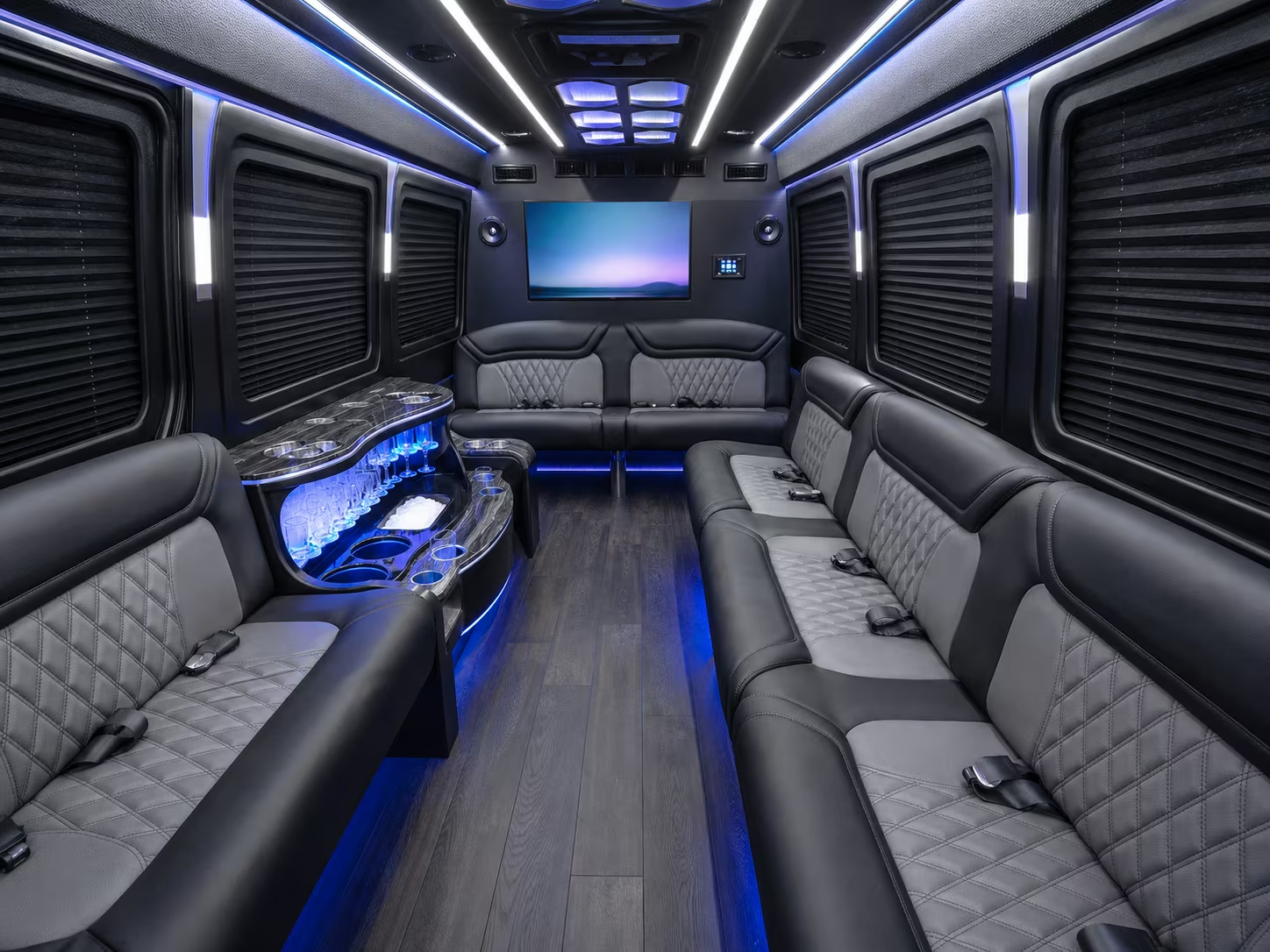
| Sprinter van | Up to ~14 | Modest — best for light packers and carry-ons | Small executive groups, quick terminal transfers | Premium leather, USB charging at every seat, tinted privacy windows |
| 14-passenger Sprinter limo | Up to 14 | Modest — carry-ons and light bags | VIP transfers, small corporate teams | Premium leather, climate control, individual lighting |
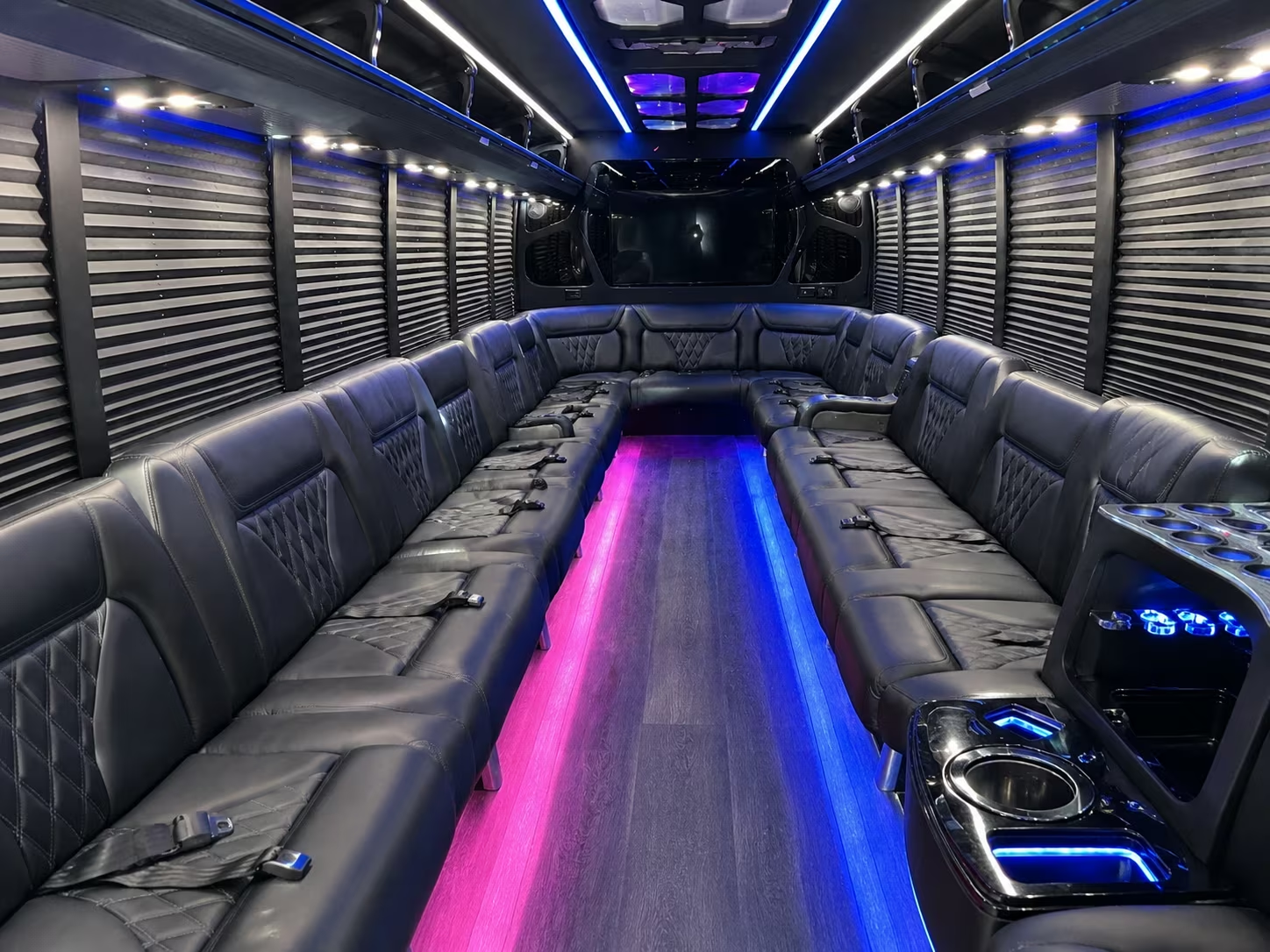
| 15–35 passenger minibus | ~15–35 | Overhead storage plus limited underfloor compartments | Mid-size corporate groups, conference delegations, wedding guest shuttles | Powerful A/C, plush reclining seats, overhead bins |
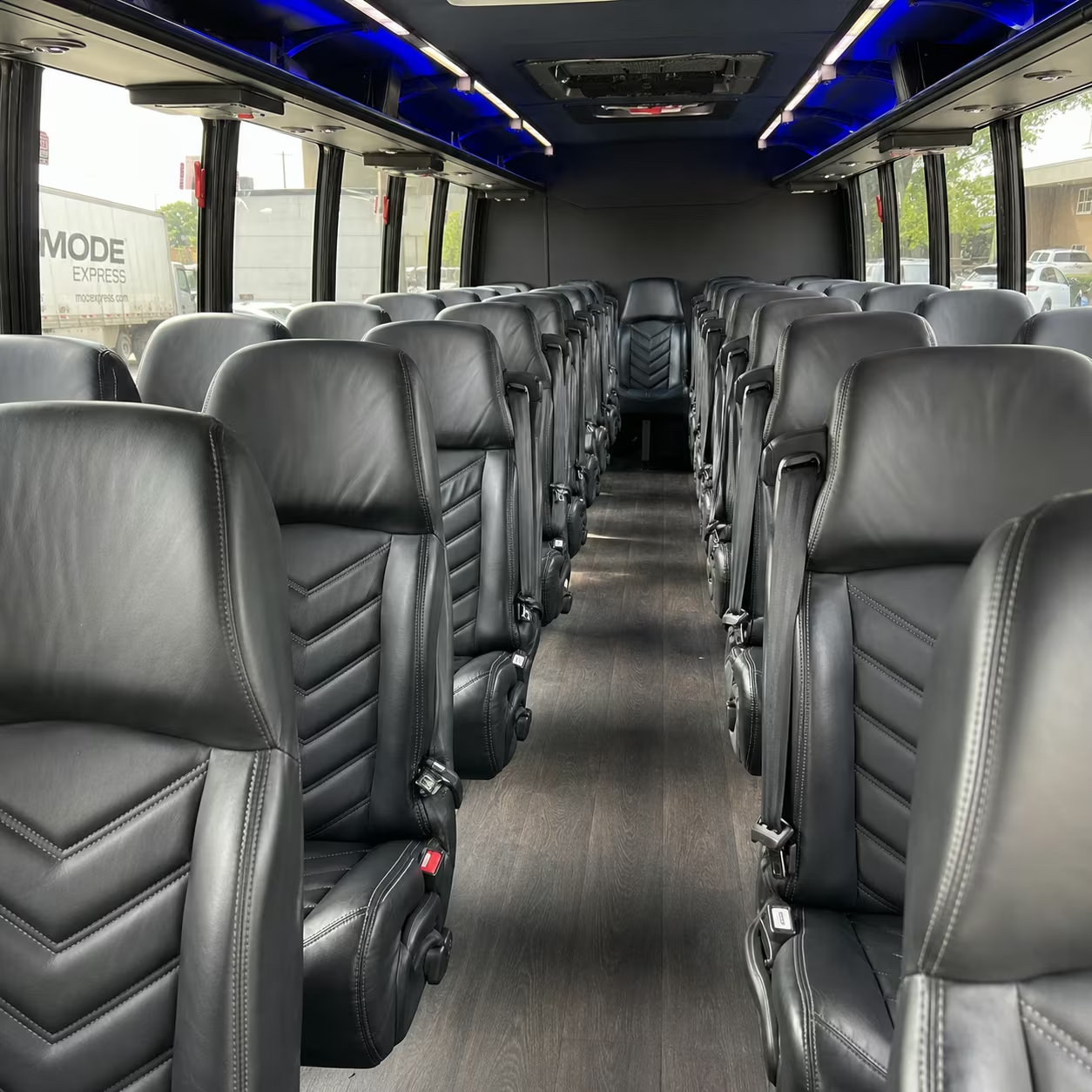
| 40–56 passenger charter bus | Up to 56 | Excellent — deep undercarriage bays for full-size checked bags | Large corporate groups, conventions, university teams, full delegations | Reclining seats, climate control, WiFi, power outlets, onboard restrooms, undercarriage bays |
For most airport runs, the undercarriage bays on a 40–56 passenger charter bus are the decisive feature — every passenger stows a full-size rolling bag in the luggage compartment the same way they would at the airline counter, and nobody fights for overhead space or blocks the aisle. For a 12-person executive team flying out of Terminal 2 with standard carry-ons and a few rolling bags, a minibus handles it cleanly and costs less than a full coach. For a 45-person convention delegation departing from a downtown SF hotel — with rolling bags, presentation equipment, and trade show materials — a 56-seat charter bus is the only vehicle where no one's lap counts as storage space.
ADA-accessible vehicles are available through the network. Note your requirements when requesting a quote, ideally at least 48 hours before your scheduled pickup. SFO's own accessible passenger services include accessible curbside zones at each terminal's arrivals level.
San Francisco Airport Charter Bus Rental Prices
Sanfranciscopartybuscompany.com shows you pricing in under 30 seconds — no account, no waiting on callbacks. Rates shift based on vehicle size, total hours reserved, pickup locations, and whether it's a weekday or weekend. To give you an idea of planning ranges: a 15–35 passenger minibus typically runs $200–$250 per hour on weekdays and $200–$275 per hour on weekends.
A 40–56 passenger charter bus runs $200–$350 per hour both weekdays and weekends. A Sprinter van for a smaller executive group runs $200–$275 per hour weekday. These are planning ranges, not quotes — the real rate for your specific date, route, and headcount comes from the online form or a call to 628-900-7180.
The per-person math usually reframes the decision fast. A 3-hour minibus rental at $225/hour split across 20 passengers comes to roughly $34 per person — less than SFO's long-term parking rate for a single car on a single day. A 3-hour charter bus at $275/hour split across 40 passengers works out to about $21 per person.
No one parks, no one navigates US-101 alone on a tight departure morning, and the group lands at the same terminal at the same time. Check the San Francisco party bus prices page for a fuller breakdown, or call 628-900-7180 any time — the quote is free and takes about a minute.
A Sample SFO Airport Run
To give you an idea of how an SFO airport run looks on the ground: a 28-person corporate group departing from a SOMA hotel for a 10:15 a.m. United flight out of Terminal 3 (F gates) books a 30-passenger minibus with a 7:45 a.m. hotel pickup. The group boards together, the bus takes US-101 South, and the group is at the Terminal 3 east-end departures curbside by 8:30 a.m. — 105 minutes before takeoff, no parking coordination required.
On the return flight, the minibus meets the group at Terminal 3 arrivals, Doors 10–12 (least congested during the current construction phase), after everyone texts the coordinator from baggage claim. A 3-hour round-trip booking at that vehicle size might work out to roughly $650–$750 total — about $23–$27 per person, for the full round trip, with everyone's bags handled cleanly.
SFO Tips Every Group Planner Should Know
The gather-first rule is non-negotiable at SFO. Airport curbside zones run on tight turnover cycles. A bus sitting at the arrivals curbside waiting for a group that's still split between two baggage carousels will get moved by airport staff.
Have every member of your group assembled at the baggage claim area with all bags in hand before the coordinator calls the bus in. Thirty seconds of pre-coordination prevents ten minutes of circling on the arrivals roadway.
T3 arrivals: use Doors 10–12 in 2026. With the departures curb construction and the carousel closures in T3, the east-side arrivals doors are the active pickup corridor. SFO's own guidance identifies Doors 10–12 as the least congested exits during this construction phase.
Confirm your exact Terminal 3 pickup door when you book and check the official SFO site before your travel date — construction milestones can adjust the access picture.
SFO's long-term parking is not adjacent to the terminals. Long-Term Garages 1 and 2 sit off the main terminal loop and require the free AirTrain shuttle to reach the terminals — and for Terminal 3, that shuttle now stops at the Terminal 2 AirTrain station, which then requires a walk through construction paths. Factor in that additional connection on both ends for any group member who decides to drive and park separately.
BART is a legitimate option for individuals, but not groups with gear. The BART station is in the International Terminal's G concourse, accessible from all terminals via the free AirTrain. One-way fare to Powell or Montgomery is approximately $11.80, and the ride to downtown San Francisco takes about 30 minutes.
It's a great option for a solo traveler heading to a Union Square hotel. It's a logistics puzzle for a group of 16 with checked bags and multiple destination hotels spread across the Bay Area.
Build in buffer for the US-101 corridor. Departure mornings and arrival evenings that overlap with Bay Area commute windows — roughly 7–9 a.m. and 4–7 p.m. on weekdays — can add 20–40 minutes to the drive from downtown SF or the East Bay. Build the buffer in when you set your pickup time, and let the bus absorb the variability instead of your departure time.
Types of Groups That Book SFO Bus Rentals
The same network of bus companies that handles game-day transportation to Oracle Park or Chase Center handles SFO airport runs with equal frequency — the airport trip is just more consequential when flight times are fixed. These are the groups that most commonly request SFO runs through Sanfranciscopartybuscompany.com:
Corporate conference and convention groups. A technology company shuttling 40 employees to Salesforce Dreamforce in September or Oracle CloudWorld books a charter bus from their SOMA or Financial District office directly to departures curbside — everyone checks in together, no one misses the flight because they got caught in Bay Bridge traffic. On the return, the bus is at Terminal 3 arrivals when the last bag lands on the carousel.
For recurring corporate shuttle programs or multi-day airport legs, see the San Francisco corporate event transportation page.
Wedding guest shuttles from SFO. Out-of-town guests flying into SFO for a Napa or Marin wedding need coordinated pickup from arrivals and a clean run to the venue or hotel block — a process the San Francisco wedding transportation page covers in detail. The minibus is the standard fit for wedding airport legs, with overhead storage for rolling bags and reclining seats for guests who are already jet-lagged before the rehearsal dinner.
Athletic teams and academic delegations. University sports teams, performing arts groups, and academic delegations departing from or arriving at SFO regularly need the undercarriage capacity of a full charter bus — instrument cases, athletic equipment, and presentation materials don't fit in a rideshare. The bus loads gear in the luggage bays at the team facility, drops everyone at the right terminal, and picks up the full group plus equipment on the return.
Multi-city pickup groups from across the Bay Area. A group that includes members from Oakland, Berkeley, San Mateo, and downtown San Francisco doesn't need six cars — it needs one bus that runs the pickup circuit and deposits everyone at SFO together. Multi-stop Bay Area pickup runs are straightforward to arrange through San Francisco group transportation services; provide all pickup addresses, times, and terminal assignments when you request a quote.
Frequently Asked Questions About SFO Charter Bus and Party Bus Rentals
Where exactly does a charter bus drop off at SFO?
Charter buses drop passengers at the Departures level curbside for their specific terminal — the upper roadway at each terminal building. For Terminals 1 and 2, the drop-off uses the standard departures curbside. For Terminal 3 in 2026, the departures curb between Doors 6 and 13 is closed due to construction; SFO routes T3 morning drop-offs via Terminal 2 or the T3 arrivals level.
United passengers with D/E gate flights check in at Terminal 2 counters. For the International Terminal, charter buses access the center island Departures Level at Zones 14–17. Confirm your specific drop-off door with your booking confirmation and review the official SFO ground transportation page before your trip.
Where does a bus pick up arriving passengers at SFO?
Bus and shuttle pickups for arriving passengers use the Arrivals level curbside (Level 1, lower roadway) at each terminal. Have every member of your group assembled at baggage claim with all bags before your coordinator calls the bus in — curbside wait windows at SFO are timed and enforced. For Terminal 3 arrivals in 2026, baggage claim carousels 1–3 are temporarily closed; use Doors 4–12, with Doors 10–12 identified by SFO as the least congested pickup exits during the current construction phase.
For International Terminal arrivals, the pickup is curbside at the lower level outside the customs exit.
What's happening with Terminal 3 construction in 2026?
SFO's $2.6 billion Terminal 3 West Modernization project is in active construction through 2029, with significant access changes in 2026. The T3 AirTrain station is closed until a new station opens in 2027 — the Terminal 2 AirTrain stop now serves both T2 and T3. The departures curb between Doors 6 and 13 is closed; United passengers with D/E gate flights should check in at Terminal 2 counters.
Baggage claim carousels 1–3 are out of service on the arrivals side; use Doors 4–12, least congested at Doors 10–12. Always confirm current T3 access details with SFO before your travel date, as construction milestones shift the layout periodically.
How much does it cost to park at SFO?
The short-term domestic and international garages charge approximately $4 per 30 minutes, capped at around $39 per 24 hours. Long-term parking runs approximately $27 per day when booked in advance. Rates can change, so check the official SFO parking page before your trip.
For groups where four or more people would each need to park separately, the per-person parking cost often exceeds the per-person cost of a shared charter bus or minibus — which is why the bus math works so clearly for airport groups.
Does BART serve SFO?
Yes. BART's SFO station is in the International Terminal's G concourse. From domestic terminals, take the free AirTrain to reach the station — note that the T3 AirTrain station is closed through 2027, so T3 travelers use the Terminal 2 AirTrain stop.
A one-way ticket to downtown San Francisco (Powell, Montgomery, or Embarcadero stations) runs approximately $11.80, and the trip takes about 30 minutes. BART runs 5 a.m. to midnight Monday through Friday, 6 a.m. to midnight Saturdays, and 8 a.m. to midnight Sundays. For solo travelers heading to a downtown hotel, BART is hard to beat.
For a group of 14 with checked bags, it doesn't scale.
How far in advance should we book a charter bus or minibus for an SFO run?
For standard airport runs, two to four weeks of lead time is generally workable. During Bay Area peak periods — Salesforce Dreamforce in mid-September, Oracle CloudWorld in September, Outside Lands festival in August, and holiday travel around Thanksgiving and December — the charter bus and minibus supply in San Francisco tightens significantly. For those dates, booking 6–8 weeks in advance is strongly advisable.
If your departure or arrival overlaps with a major Bay Area convention or sporting event, book as soon as your flight is confirmed. Call 628-900-7180 to check availability for your specific date.
Can a bus handle multi-city pickups before going to SFO?
Yes — multi-stop pickup runs are common. A bus that starts in Oakland, picks up in Berkeley, collects a final group in SOMA, and drops everyone at two different SFO terminals is a standard itinerary request. Provide all pickup addresses, times, and terminal and airline assignments when you request your quote, and the itinerary gets built around your actual flight schedule.
Call 628-900-7180 any time — a multi-stop quote takes about a minute, same as a direct run.
Can a bus wait near SFO while we clear baggage claim?
Yes. The Cell Phone Waiting Lot at North McDonnell Road and San Bruno Avenue is a free monitored staging area where vehicles can hold for up to 60 minutes at no charge. It sits approximately 5–7 minutes by car from the arrivals curbside at any terminal.
The standard sequence: your flight lands, your coordinator tracks progress in the baggage claim area, and the bus moves from the waiting lot to the arrivals curbside only once the full group is assembled with bags. That coordination is what prevents the curbside hold problem — and it's why the gather-first rule exists.
What's the best vehicle for a 12-person executive group flying out of Terminal 2?
For a group that size with standard rolling bags and carry-ons, a Sprinter van or a smaller minibus is the right fit — enough capacity for the group and gear without paying for a full charter bus. Both give you curbside departures access at Terminal 2's upper roadway. For groups with heavier equipment loads or checking oversized bags, the minibus's overhead storage and limited underfloor compartments handle the extra volume.
Call 628-900-7180 to confirm the right vehicle for your exact headcount and luggage situation.
Book Your SFO Charter Bus or Party Bus Rental Today
The fastest way to get pricing for your SFO group run is right here. Through Sanfranciscopartybuscompany.com's large network of bus companies serving San Francisco and the Bay Area, you can compare charter buses, minibuses, Sprinter vans, and Sprinter limos with pricing in under 30 seconds — no account required, no obligation. Whether it's a 14-person executive team heading to Terminal 2 departures curbside, a 45-person conference delegation coordinating multi-city Bay Area pickups before a morning United flight, or an out-of-town wedding group needing arrivals pickup and a hotel run to Marin — a quote is one call or one form away.
Call 628-900-7180 any time, or fill out the quick online form to see pricing for your exact date, route, and headcount. Also planning an event during your Bay Area trip? The Oracle Park charter bus guide and Chase Center bus rental guide cover the logistics for those runs separately.
San Francisco International Airport
780 S Airport Blvd, San Francisco, CA 94128
(650) 821-8211
Official SFO Ground Transportation